Why Does Your Business Need Its Own Domain? (and What Happens If You Don't Have One)
 Mark Sullivan⏱ 11 min read
- Do you really need your own domain?
- What exactly is a domain? A plain-English explanation
- 5 things you lose without your own domain
- 1. Credibility and first impression
- 2. Google visibility (SEO)
- 3. Professional email
- 4. Brand control and security
- 5. Market value of the domain
- What happens when you operate without a domain? Real scenarios
- How to choose a good domain? A practical guide
- Rule 1: Short and simple
- Rule 2: Go for brand, not keywords
- Rule 3: Choose .eu for the European market
- Rule 4: Check the domain's history
- Rule 5: Register it in your name
- Your own domain is just the beginning — what else do you need?
- Hosting — the home for your website
- Website builder — a website without programming
- SSL certificate — the padlock in the browser
- How to get started with cloudmy.eu? Step by step
- How much does it cost? Less than you think
- Summary Table: With vs Without a Domain
- FAQ
- Is a custom domain necessary for a small business?
- How much does registering a domain name cost?
- Can I transfer my domain from another registrar?
- What is an SSL certificate and do I need one?
- How long until my website works after domain registration?
- Summary — don't wait for the competition to overtake you
- Check your domain availability
Having your own domain name isn't a luxury — it's the foundation of your online presence. Find out why a business without a domain loses customers, money and credibility — and how to fix it in a matter of minutes with cloudmy.eu.
Do you really need your own domain?
Imagine you're looking for a good plumber in your city. One of them has a business card with the address john-plumber.freesite.com, and the other — plumberlondon.co.uk. Which one would you trust more?
The answer is obvious. And that's precisely the power of having your own domain name.
Surprisingly, many businesses across Europe still operate without their own website, or use free subdomains offered by various platforms. This is a mistake that has a very real cost — in the form of lost customers, reduced credibility, and a lack of control over your own brand.
In this article, we explain precisely:
- What a domain is and why it matters,
- What you specifically lose without one,
- How professional email works and why [email protected] is a bad idea,
- How to easily get started with your own website and domain through cloudmy.eu.
What exactly is a domain? A plain-English explanation
A domain is the address of your website — for example cloudmy.eu or yourcompanyname.eu. It's what appears in the browser bar, on business cards, in email signatures and in Google search results.
It consists of two main parts: the name (e.g. cloudmy) and the extension (TLD) — for example .eu, .com, .co.uk. For the European market, .eu works best — it builds a sense of local trust with European users and supports visibility on Google.
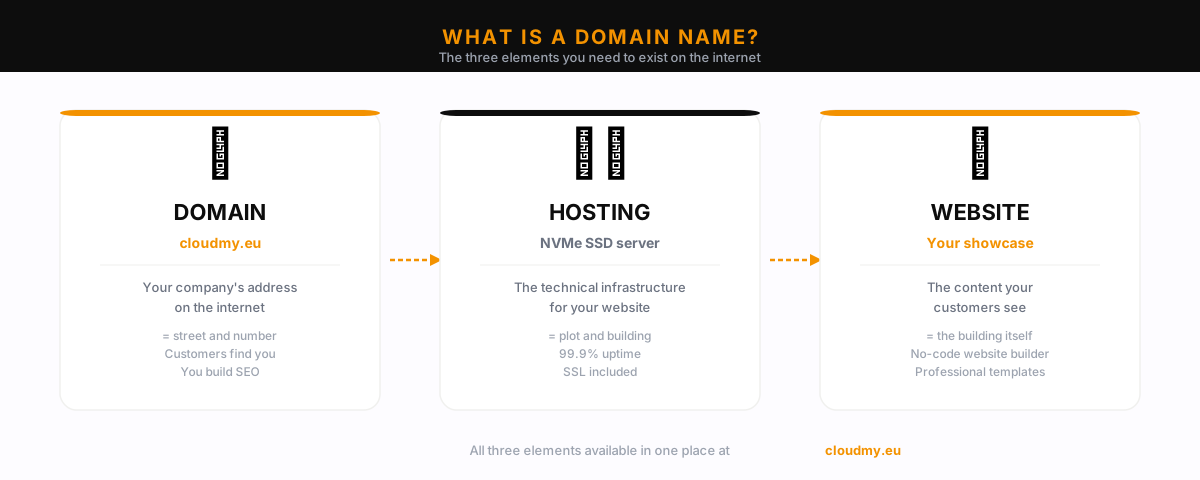
A simple analogy: Domain = address (street and number) | Hosting = plot with building (server) | Website = the building and its contents. You need all three for your business to exist online.
5 things you lose without your own domain
1. Credibility and first impression
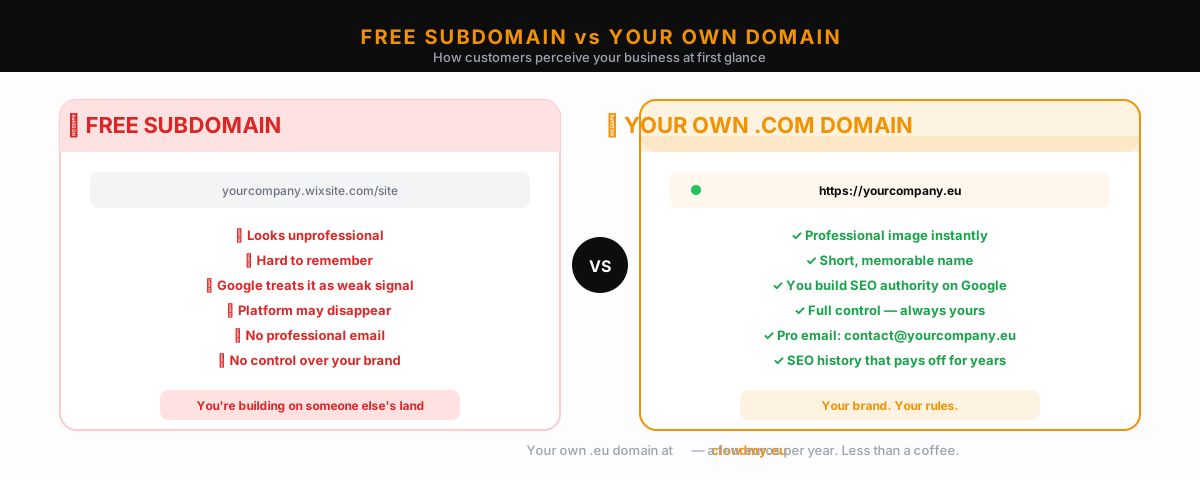
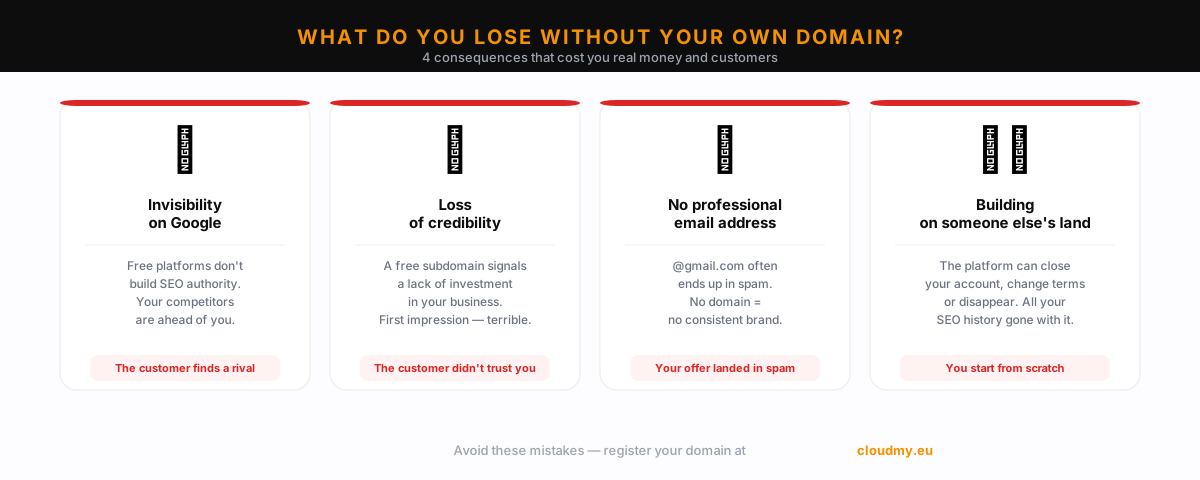
A client who lands on yourcompany.wixsite.com/site unconsciously asks themselves: "Is this business serious?". Free subdomains immediately signal that someone hasn't invested even a few euros per year in their own address. And that casts a shadow over the perception of the entire business.
Having a domain name is exactly the same as having a business address. It's the place where people can find you, read your content and buy your products.
Your own domain says: "I'm here for real. You can trust me."
2. Google visibility (SEO)
This is one of the most important reasons. Sites operating under their own address have significantly better chances of stable search engine visibility, building an SEO history and attracting natural links — compared to sites on free subdomains.
What does this mean in practice? A business without its own domain simply doesn't exist on Google the way it should. Someone searching for your services will find a competitor — because they have their own address, are collecting links and have been building authority for months or years.
Your own domain is the foundation on which you build all your SEO. Without it, there's nothing to build on.
3. Professional email
Imagine receiving a proposal from a company with the address [email protected]. Now compare that with [email protected].
The difference is enormous. With your own domain, you have full control over how your communications appear — and how you're perceived by clients, partners and spam filters.
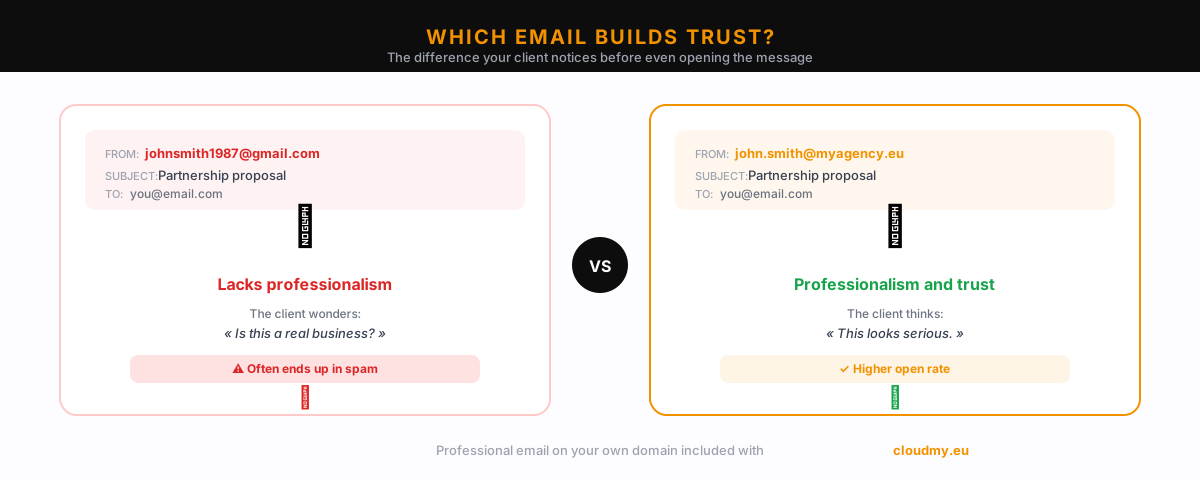
A professional email on your own domain means:
- Higher message open rates,
- Greater trust from recipients,
- Better reputation with spam filters,
- A consistent brand image in every interaction.
At cloudmy.eu, professional email on your own domain is available straight away — with no complex setup.
4. Brand control and security
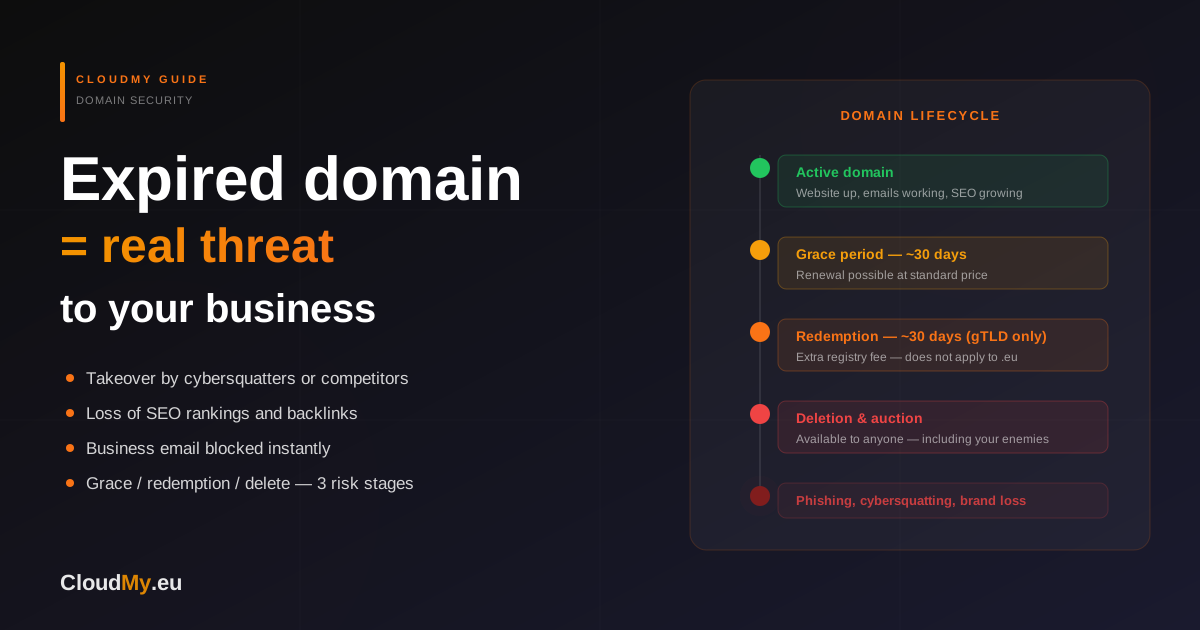
If you're building your presence on a free platform or using someone else's subdomain, you're essentially building on land you don't own. The platform can change its terms, raise its prices, close your account or simply disappear from the market. What happens to your website, your content, your SEO history? They vanish along with the platform.
Your domain should belong to you. If it doesn't, you may struggle to regain control of the address you've been promoting and under which you're visible on Google, in ads or on business cards.
Your own domain is an investment in the security of your business.
5. Market value of the domain
This is a lesser-known fact: a good domain can gain value over time. If your address is short, generic or has a long SEO history, it becomes attractive on the secondary market too.
A domain is an asset. Businesses that build their address over the years create something with real value — not just for themselves, but for potential buyers too.
What happens when you operate without a domain? Real scenarios
Scenario 1: A client searches for you on Google
They type "accounting services Manchester". On the first page of results appear businesses with their own domains, optimised websites and reviews. Your site on a free platform? On the third or fourth page, if it appears at all.
Scenario 2: You send a proposal to a client
Your email from [email protected] ends up in the spam folder or is ignored. An email from [email protected] lands in the inbox and is taken seriously.
Scenario 3: A client wants to recommend you to friends
"What was that company called? Do you remember the address?" — "Something on Wix, I can't remember..." vs. "cloudmy.eu — go and check it out." Your own simple domain is a memorable business card.
Scenario 4: You outsource your website to an agency
The agency asks for your domain. You don't have one. They register it in their name. A year later the company closes, the domain belongs to them — and you start from scratch, having lost all your SEO equity.
How to choose a good domain? A practical guide
If you are wondering which extension to choose — .eu, .com or a country TLD — the full answer is in our dedicated guide.
Rule 1: Short and simple
The shorter, the better — a shorter domain is easier to remember, pronounce and share. Avoid long, multi-word addresses. johnsmith-plumbing-services-manchester.eu is a bad idea — both for users and for brand aesthetics. Adopt the rule: maximum 15 characters in the name.
Rule 2: Go for brand, not keywords
About fifteen years ago, a domain with a keyword phrase (cheapcarpets.eu) gave an advantage on Google. Today the philosophy is "brand first, keyword second" — we remember brands, we forget keywords. Generic keyword domains can actually limit your brand's development in the future.
Rule 3: Choose .eu for the European market
For a business operating in Europe, .eu is the obvious choice. It's associated with locality and trust, and European users are more likely to click on regional addresses — especially for purchasing decisions.
Rule 4: Check the domain's history
If you're registering a domain that previously belonged to someone else, check its history (e.g. via Wayback Machine). It may have been used for spam or other practices that left a negative mark on Google.
Rule 5: Register it in your name
This seems obvious, but many businesses make this mistake — especially when outsourcing website creation to an agency. Always make sure the domain is registered in your name or your company's name, not the contractor's.
Your own domain is just the beginning — what else do you need?
The domain is the foundation, but for your business to truly exist online, you need a few more elements.
Hosting — the home for your website
Hosting is the server where your website's files are stored. Its quality determines loading speed, reliability and security. At cloudmy.eu, we offer hosting on a modern cloud infrastructure:
- Fast page loading speed (crucial for SEO and UX),
- 99.9% uptime,
- Automatic backups,
- SSL certificate included as standard.
Website builder — a website without programming
You don't need to know HTML, CSS or any programming language to have a professional website. The cloudmy.eu website builder lets you build a site using drag-and-drop — choose a template, add your own content and images, and you're done.
SSL certificate — the padlock in the browser
An SSL certificate makes your website address start with https:// instead of http://. It's a security signal for users and one of Google's ranking factors. At cloudmy.eu, the SSL certificate is included in every plan — at no extra charge.
How to get started with cloudmy.eu? Step by step
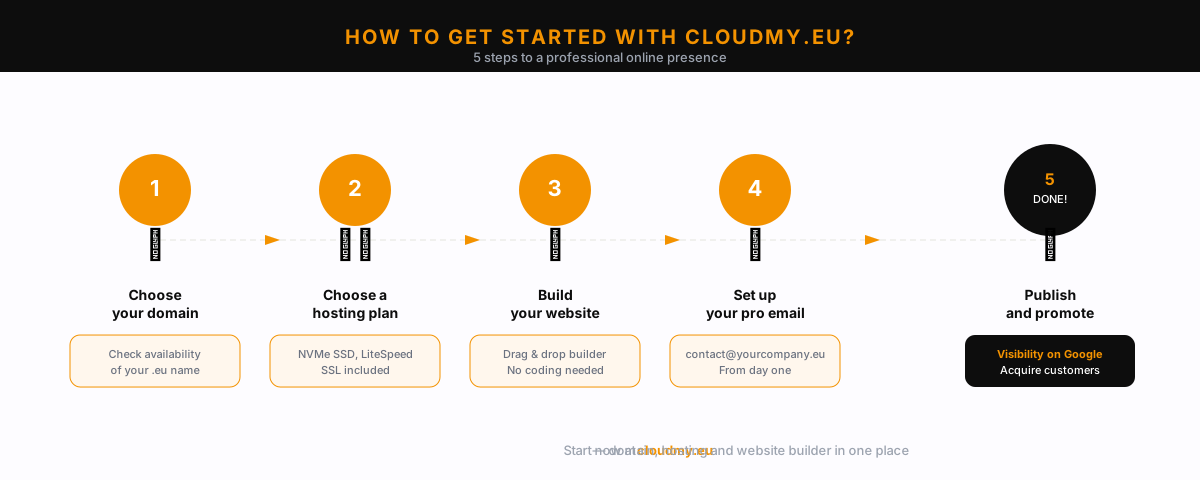
- Choose a domain — Go to cloudmy.eu and check the availability of your chosen name. If it's free — register it straight away.
- Choose a hosting plan — Match the package to your needs: we have plans for small brochure sites as well as larger services.
- Build your website — Using the built-in builder, choose a template and adapt it to your industry. No coding, no technical knowledge required.
- Set up your professional email — Add a mailbox on your own domain and start sending professional messages from day one.
- Publish and promote — Your website is ready. Start building your Google visibility, collecting reviews and attracting customers online.
How much does it cost? Less than you think
This is the question most business owners ask. The surprise: your own .eu domain costs a few tens of euros per year — less than two coffees out.
Hosting with a website builder at cloudmy.eu is an investment accessible to every business — even sole traders. Compared with what you lose without your own website (customers, credibility, Google visibility) — it's an almost symbolic amount.
Summary Table: With vs Without a Domain
| Element | ❌ Without own domain | ✔ With own domain |
|---|---|---|
| Website address | mybiz.freewebsite.com | mybusiness.eu |
| Email address | [email protected] | [email protected] |
| Google ranking | Very hard to build | Full SEO control |
| Customer trust | Low | High |
| Annual cost | €0 (but costly in other ways) | approx. €8–15/year |
FAQ
Is a custom domain necessary for a small business?
Yes — even a sole trader benefits immediately from a custom domain. The cost is just a few euros per year, and the return is immediate: professional image, custom email address and improved Google visibility.
How much does registering a domain name cost?
Domain registration typically costs between €8 and €15 per year depending on the extension and registrar. At CloudMy, you get a domain with free SSL and a full DNS management panel included.
Can I transfer my domain from another registrar?
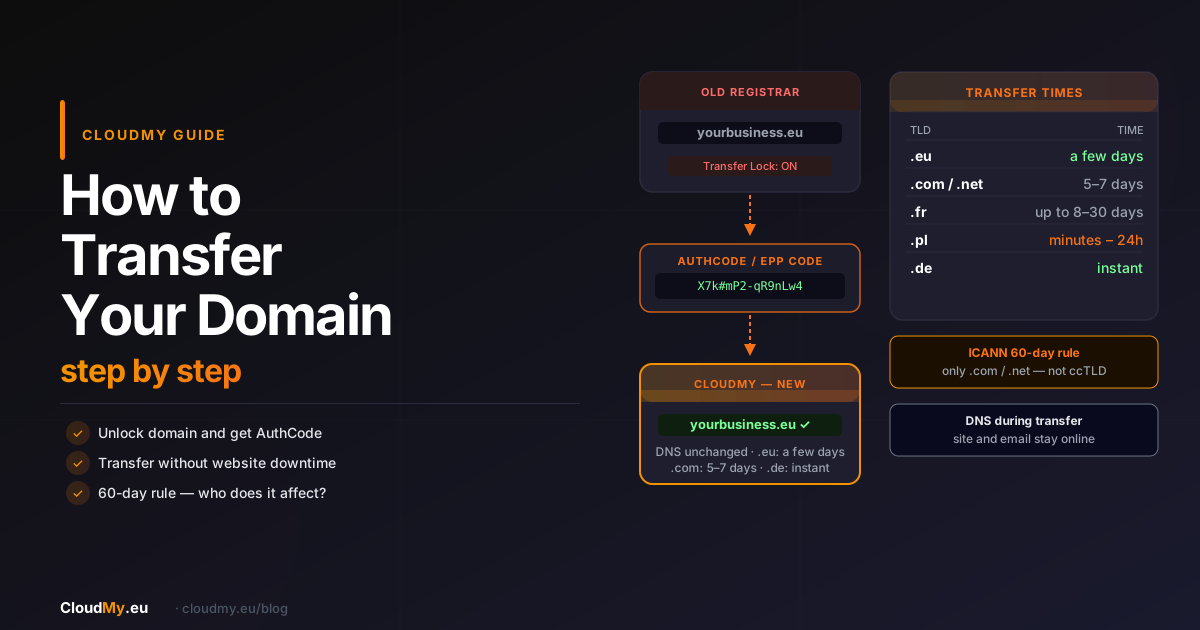
Yes — transferring a domain to CloudMy is straightforward and causes no downtime. You will need the authinfo (EPP) code from your current registrar. Transfers typically complete within 5 business days.
What is an SSL certificate and do I need one?
An SSL certificate encrypts the connection between your visitor's browser and your server (the padlock icon in the address bar). Since 2018, Google penalises sites without SSL. At CloudMy, Let's Encrypt SSL is free and installs automatically.
How long until my website works after domain registration?
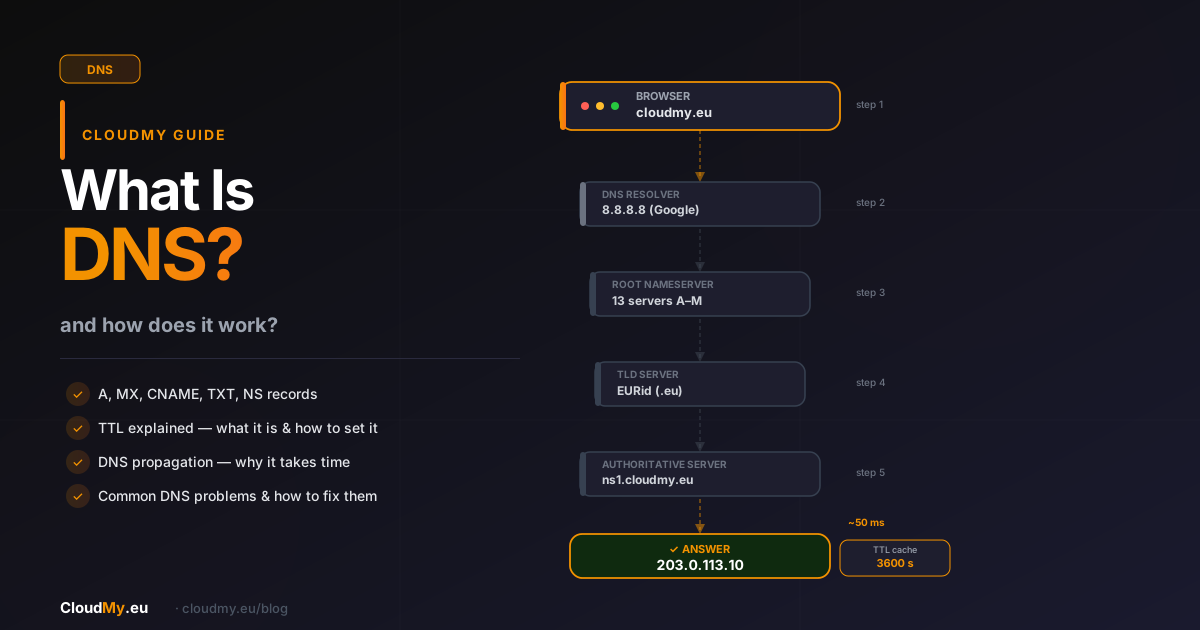
After registering your domain, you need to configure DNS records to point to your hosting server. DNS propagation takes from a few minutes to 48 hours. Learn more: What is DNS and how does it work?
Summary — don't wait for the competition to overtake you
Your own domain isn't a luxury reserved for large companies. It's an absolute essential for anyone who wants to be taken seriously online — regardless of industry, company size or technical experience.
✘ Without your own domain
- Invisible on Google
- You lose credibility
- You're building on someone else's land
- No professional email
✔ With your own domain at cloudmy.eu
- Professional image from day one
- An SEO history that pays off for years
- Full control over your brand
- Hosting + builder + email in one
Check your domain availability
Domain, hosting and website builder — all in one place. Start building your online presence today.
Ready to get started? Check your domain availability at CloudMy and pair it with our web hosting — with free SSL and full DNS management included.