.eu, .com or Country Domain? Which Extension to Choose for Your Business
 Mark Sullivan⏱ 9 min read
- Quick Comparison: .eu vs .com vs Country TLD
- The .eu Domain: European Identity at Scale
- SEO Advantages of .eu
- Customer Trust with .eu
- The .com Domain: The Global Standard
- When .com Makes Sense
- Limitations of .com in Europe
- Country TLDs (ccTLDs): Maximum Local Power
- When a Country TLD is the Best Choice
- Limitations of Country TLDs for Multi-Country Businesses
- How to Choose: Decision Guide
- What If Your Domain Name is Already Taken?
- FAQ
- Is .eu better than .com for SEO in Europe?
- Can I register a .eu domain if I am not based in the EU?
- Should I register both .eu and .com for my business?
- Does a .eu domain work for e-commerce across multiple EU countries?
- How much does a .eu domain cost?
- What happens if I forget to renew my .eu domain?
- Registering Multiple Extensions: Smart or Overkill?
- Brand Protection
- 301 Redirects and Brand Consistency
- Progressive International Expansion
- What Google Actually Says About Domain Extensions
- Extension Is Just One Factor
- Conclusion: Start with What Matches Your Market
Choosing the right domain extension is one of the most important decisions when launching your website. Should you go with .eu, .com, or a country-specific TLD like .de, .fr, or .pl? Each option affects your Google ranking, customer trust, and brand positioning differently. In this complete guide, we break down all three choices so you can make the right call for your business.
If you are just starting out and want to understand why having your own domain matters, read our article on why your business needs its own domain name first.
Quick Comparison: .eu vs .com vs Country TLD
Here is a side-by-side overview before we go into detail:
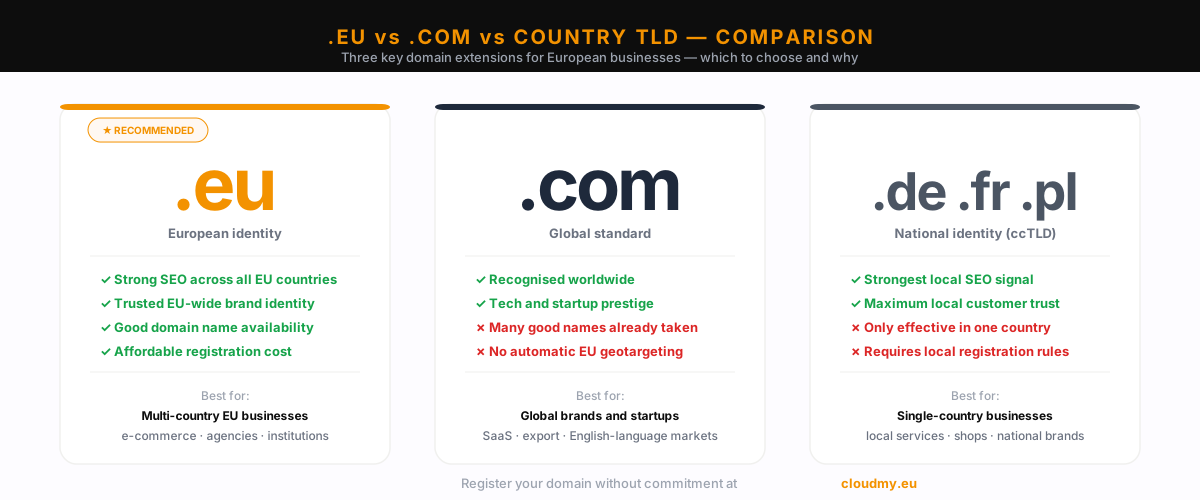
| Criterion | .eu | .com | Country TLD (.de/.fr/.pl) |
|---|---|---|---|
| SEO in Europe | Good across EU | Neutral (manual setup) | Excellent locally |
| Local customer trust | Moderate | Moderate | Maximum |
| International reach | EU-wide | Global | Single country |
| Name availability | Very good | Low | Good |
| Avg. price / year | ~€8–12 | ~€10–15 | ~€6–12 |
| Best for | Multi-country EU businesses | Global brands | Single-country businesses |
The .eu Domain: European Identity at Scale
The .eu domain is managed by EURid and represents the European Union. It signals to both users and search engines that your business operates within Europe. For companies active in multiple EU countries, it offers a neutral, pan-European identity that no single country TLD can match.
SEO Advantages of .eu
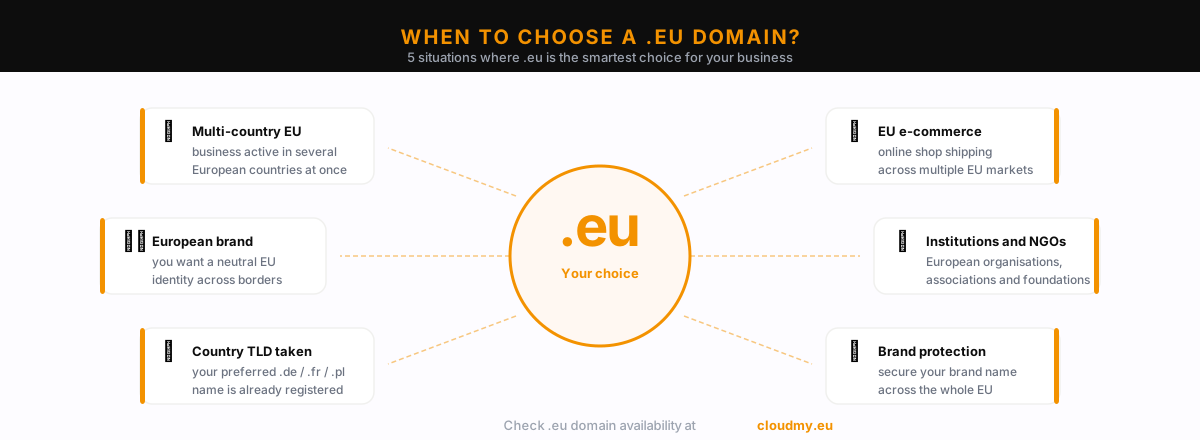
Google recognises .eu as a geographically targeted extension for the European Union. This means your site can receive positive local SEO signals across all EU member states simultaneously — something that country-specific TLDs can only do for a single country.
For businesses that sell across Germany, France, Poland, and other EU markets from a single website, .eu is one of the most SEO-efficient choices available. It removes the need to maintain separate country TLD sites or complex hreflang configurations for intra-EU reach.
Customer Trust with .eu
European consumers are increasingly familiar with .eu. It conveys reliability, stability, and a connection to European standards and regulations. For B2B companies, NGOs, and institutions operating at the EU level, a .eu address adds instant credibility.
The .com Domain: The Global Standard
The .com is the most recognised domain extension worldwide. It carries global prestige and is the default expectation for international brands, tech startups, and English-language businesses.
When .com Makes Sense
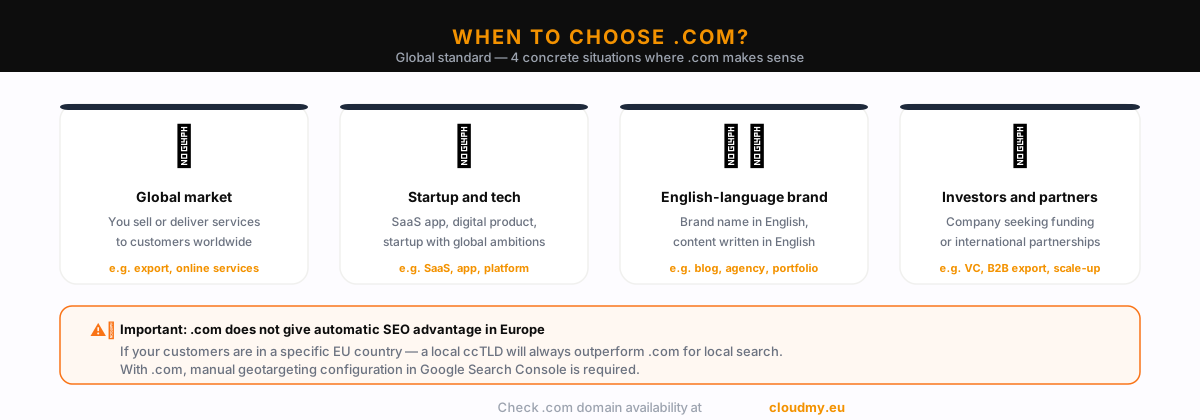
- You target a global market: if your customers are worldwide, .com is the universally understood choice.
- You are building a tech startup: investors, accelerators, and the startup ecosystem expect .com by default.
- Your brand and content are in English: a .com domain aligns naturally with English-language content strategies.
- You are seeking international investors or partners: .com conveys global ambition and legitimacy.
Limitations of .com in Europe
A common misconception is that .com automatically ranks better everywhere. In reality, Google treats .com as a generic extension with no built-in geotargeting. For a business whose customers are primarily in a single EU country, a local ccTLD will almost always outperform .com for local search results.
With .com, you must manually configure geotargeting in Google Search Console — a step many businesses skip, losing a valuable SEO advantage.
Country TLDs (ccTLDs): Maximum Local Power
Country code top-level domains like .de, .fr, .pl, .it are the strongest possible signal for local search. If your business serves customers primarily in one country, a local ccTLD delivers the best SEO results and highest customer trust within that market.
When a Country TLD is the Best Choice
- You serve a single EU country: local ccTLDs dominate local search results in their respective markets.
- Local customer trust is critical: studies consistently show that local users trust country TLDs more than generic extensions for local purchases.
- You want maximum local SEO without configuration overhead: no Search Console geotargeting setup needed — the TLD itself signals your target market.
Limitations of Country TLDs for Multi-Country Businesses
If you expand to multiple EU markets, managing separate ccTLD sites becomes complex and expensive. Each country site requires separate content, hosting, and SEO effort. In this case, a .eu domain or a subdomain/subfolder strategy may be more efficient.
How to Choose: Decision Guide
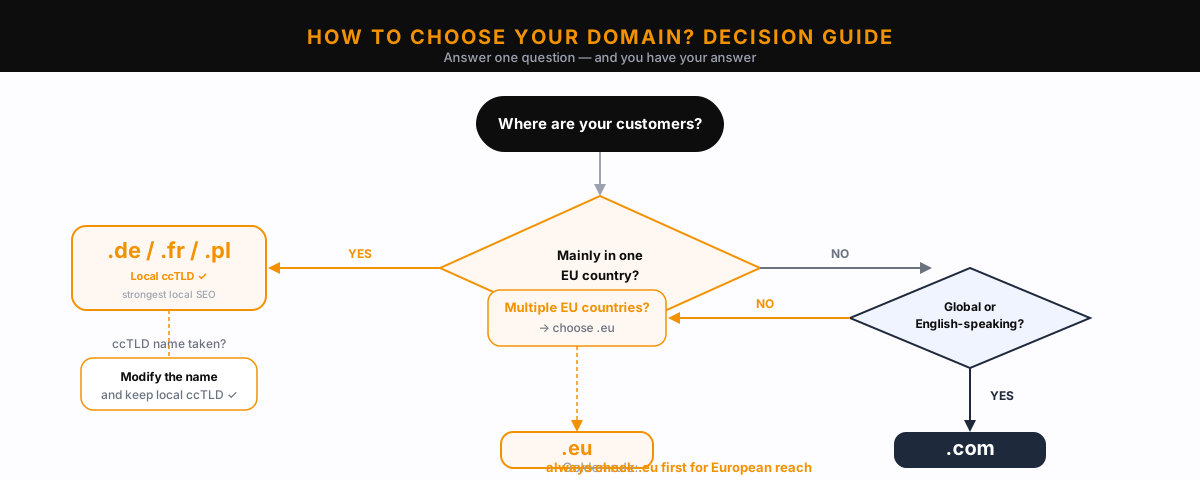
Use this simple flowchart to find the right extension for your situation:
What If Your Domain Name is Already Taken?
This is a common challenge, especially for common words or popular business names. Here is what we recommend:
- Modify the name slightly: add your city, industry, or a qualifier — for example smith-plumbing.eu instead of smithplumbing.eu.
- Try a hyphen: my-brand.eu is often available when mybrand.eu is taken.
- Check if the domain is actually in use: many domains are registered but unused. You may be able to contact the owner and negotiate a purchase.
- Consider a different TLD: if .eu is taken, check .com or your relevant country TLD — and vice versa.
FAQ
Is .eu better than .com for SEO in Europe?
For multi-country EU reach, .eu has a built-in geotargeting advantage that .com lacks. Google recognises .eu as targeting the European Union, giving it an SEO edge for pan-European searches. However, for a single-country business, the local ccTLD (like .de or .fr) will always outperform both .eu and .com for local rankings.
Can I register a .eu domain if I am not based in the EU?
To register a .eu domain, you must have a registered address, presence, or trademark within the European Union. Non-EU individuals and companies are generally not eligible to register .eu domains under current EURid rules.
Should I register both .eu and .com for my business?
If your brand has international ambitions, registering both is a smart defensive move. You can redirect one to the other, or use them for different language versions of your site. It also prevents competitors from registering your brand name under an extension you do not own.
Does a .eu domain work for e-commerce across multiple EU countries?
Yes — a .eu domain is an excellent choice for e-commerce stores that ship or deliver services across multiple EU markets. It signals European legitimacy and avoids the complexity of managing separate country TLD sites. Pair it with proper hreflang tags for multilingual SEO.
How much does a .eu domain cost?
A .eu domain typically costs between €8 and €12 per year depending on your registrar. At CloudMy, pricing is transparent with no hidden fees, and full DNS management is included from day one.
What happens if I forget to renew my .eu domain?
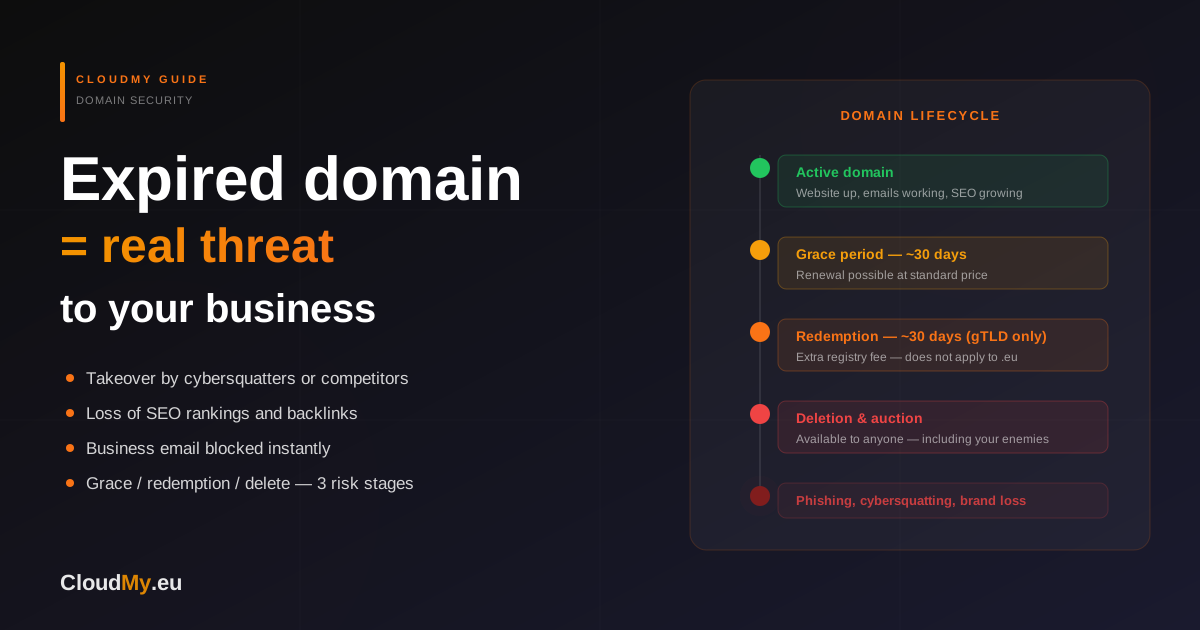
After expiry, there is usually a grace period of around 40 days during which you can still renew. After that, the domain enters a redemption period before being released publicly. Enable auto-renewal to avoid any risk of losing your domain to a third party.
Registering Multiple Extensions: Smart or Overkill?
Many businesses wonder whether it is worth registering multiple domain extensions at the same time — for example both .eu and .com. The answer depends on your situation, but here are the main cases where it makes sense:
Brand Protection
If your brand has real value or growth potential, register the closest variations before someone else does. A competitor or domain squatter could buy your brand name under .com if you only registered .eu. The cost of an extra domain (€8–15/year) is far lower than the cost of a legal dispute or losing traffic to a copycat site.
301 Redirects and Brand Consistency
If you own both mybusiness.eu and mybusiness.com, set one to redirect to the other with a 301 redirect. This ensures visitors always land on the right site regardless of which domain they type. Your SEO authority is consolidated on one domain, and you lose no traffic.
Progressive International Expansion
If you start with a country TLD but plan to expand across multiple EU markets, reserve your .eu (or .com) now. Migrating your primary domain later is costly in terms of SEO — it is much better to anticipate and secure the extension early, even if you only activate it when the time comes.
What Google Actually Says About Domain Extensions
Google has officially confirmed that generic extensions (.com, .net, .org) are treated neutrally — with no built-in geotargeting advantage. Country code TLDs (ccTLDs) like .de, .fr, .pl automatically receive a geographic signal for local searches in that country. The .eu extension is treated as geographically targeting the European Union as a whole.
In practice, for two sites of equal quality competing on the same keyword, a ccTLD will have a slight local SEO advantage over .com in its home country. For pan-European reach, .eu delivers that advantage across all EU member states simultaneously.
Extension Is Just One Factor
Domain extension is only one SEO signal among many. A fast, well-structured .com site with excellent content will outrank a slow, poorly optimised .eu site every time. The extension gives you a starting advantage — but content quality, page speed, mobile optimisation, and backlinks determine long-term rankings.
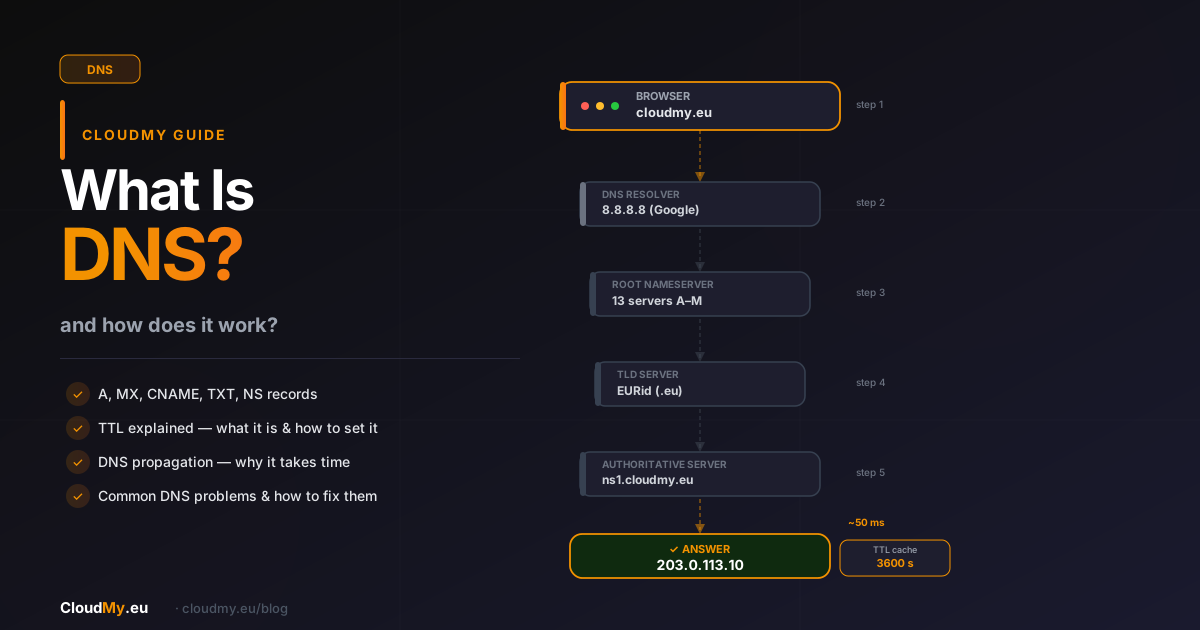
Once your domain is chosen, make sure to correctly configure your DNS records — that is the technical step that connects your domain to your hosting server. You can also check domain availability at CloudMy right now.
Conclusion: Start with What Matches Your Market
The right domain extension depends on where your customers are. For businesses active across multiple EU countries, .eu is the most efficient single-domain solution. For a single-country business, go with the local ccTLD — it delivers the strongest local SEO and customer trust. Reserve .com for truly global brands or English-language content strategies.
The golden rule: check .eu first if you serve multiple European markets — and do not overcomplicate things if your preferred name is available.